The One-Time Code for Agent-Assisted Marketplace Enrollment: What It Is and What to Do if You Fail the Check
Enrolling with an agent for 2027 Marketplace coverage? Expect a one-time code — and for some applicants, an identity check — before your agent can act.
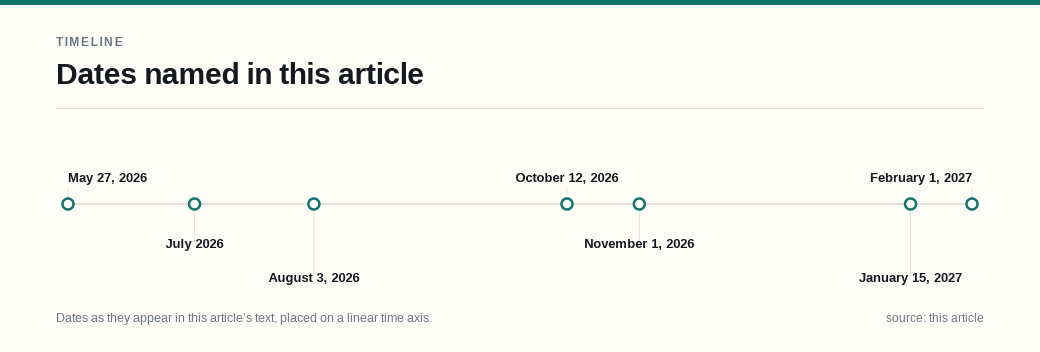
If you are signing up for 2027 health coverage through an insurance agent or broker on the federal Marketplace, your phone or inbox is going to buzz during the process — and that message is the system working, not a scam. As of Open Enrollment 2027 (November 1, 2026 – January 15, 2027), the Centers for Medicare & Medicaid Services (CMS) requires every agent-assisted application on HealthCare.gov’s platform to carry a one-time consumer authorization: a single-use passcode or confirmation link that you, not the agent, receive and act on before the agent can submit anything on your behalf. Some applications go one step further and require you to pass an identity check first.
This article explains when the code arrives, who gets the extra identity check, what to do if you fail it, and how to tell the real message from a fake.
Why CMS added the code step
The rule exists because of a specific fraud pattern: agents enrolling people in plans — or switching their plans — without their consent, typically to collect commissions on subsidized coverage. In August 2026, CMS canceled roughly 315,000 unauthorized enrollments covering more than 760,000 people — largely agent-assisted enrollments that lacked verified citizenship or immigration documentation and where the insurer could not establish contact with the consumer — and a July 2026 Government Accountability Office (GAO) report documented how consumer complaints about unauthorized enrollments and plan switches grew more than fourfold from 2023 through 2025. The details of that enforcement action are in our explainer on the Marketplace cancellations.
The scale is why this touches so many households: according to CMS, about 76% of active plan selections during Open Enrollment 2026 were made with the help of an agent, broker, or web broker. On May 27, 2026, CMS issued a change request requiring the private enrollment platforms — what CMS calls Enhanced Direct Enrollment (EDE) partners — to enforce the new checks, and the platforms had to have them running no later than October 12, 2026, before open enrollment opened.
How the one-time code works
The requirements below come from CMS’s own FAQ on the change (released August 3, 2026):
- Who sends it: The enrollment platform your agent is using — not the agent personally — sends the authorization request to the phone number or email address on your application.
- What it looks like: A text message, an email, or an automated phone call containing a one-time passcode or a one-time confirmation link.
- How long it lasts: Single use, and it expires within 15 minutes of being generated.
- Retry limit: The platform may send no more than three notifications in 24 hours for the same agent and application. If a code expires, the agent can send another one within that limit.
- Who it goes to: You. Agents are barred from entering their own phone number, email, or mailing address on your application, and the consumer — not the agent — must be able to directly access the contact information on the application.
- How long the authorization lasts: Once you authorize a specific agent, that authorization covers the plan year, until you authorize a different agent. You re-authorize every plan year, even if you used the same agent last year and even if you have an account on the platform.
The authorization is an addition, not a replacement: agents must still obtain and document your consent under 45 CFR 155.220(j)(2)(iii) before they can assist with your enrollment or your application for premium tax credits.
Who gets the extra identity check
CMS treats an application as high-risk — requiring the person filing to prove their identity before the authorization step — if any of these is true:
- It is a new consumer application, including one for someone seeking coverage in a different state.
- You have at least one active enrollment (stand-alone dental plans don’t count) with a net premium of $30 or less per month after advance payments of the premium tax credit (APTC).
- You are working with a different or new agent.
None of these flags means you did anything wrong. They match the patterns CMS saw in unauthorized enrollments — plans with near-zero premiums are the ones a bad actor can create without the victim ever seeing a bill, because the subsidy typically covers the cost while the commission still flows to the enroller.
Applications can move between categories: for a returning application — not a new one — a net premium above $30 and the same agent as last year generally means you fall into the low-risk group, where the lightweight code or link is the whole check.
What identity proofing involves, and what happens if you fail
For high-risk applications, identity proofing runs through CMS-provided Experian Remote Identity Proofing — Experian is the consumer credit reporting company CMS uses to verify identities — or through another CMS-approved service that meets the federal NIST 800-63-4 standard at identity assurance level 2 (IAL2). It works by checking the personal information you submit — name, Social Security number, date of birth, address, and contact details — against records held by data sources, rather than by asking you quiz questions.
If you cannot pass electronically, the CMS FAQ lays out the path in order:
- The platform must give you a reference number and the contact information for the Experian help desk, which you contact by phone.
- If the Experian help desk cannot verify you either, some platforms offer another CMS-approved identity proofing service.
- You can always enroll yourself through HealthCare.gov — create an account, submit your application, and upload identity documents (such as a driver’s license, passport, or immigration papers) for manual review.
Two consequences are worth knowing. First, your agent is blocked from proceeding until the identity check and authorization are both complete. Second, if you cannot complete identity proofing on a platform website, you can still apply and enroll on your own — online through HealthCare.gov or by phone through the Marketplace Call Center. What you cannot do is route it through an agent on those channels: CMS blocks adding or changing the National Producer Number (the identifier that credits an enrollment to a specific agent) on a consumer’s application through HealthCare.gov, and for Open Enrollment 2027 and beyond the Call Center no longer processes application or enrollment changes requested by an agent at all.
If your contact information is out of date
The code goes to the phone number and email on your application, so returning customers with stale contact details are the most common snag. Under the CMS rules, the fix runs through you, not your agent:
- Call the Marketplace Call Center at 1-800-318-2596 to update your contact information yourself (without the agent on the line), or
- Submit an application through a consumer pathway — HealthCare.gov or an approved platform’s consumer route — with your correct details.
An agent who offers to “put down my number instead” or to read you the code over the phone is not following the rules; the consumer must be able to directly access the contact information on the application. That pressure tactic is also one of the clearest tells of a bad actor.
Other things that changed for agents this season
Three related changes may affect how your enrollment goes:
- Fewer new agents. An interim final rule (91 Fed. Reg. 60317) blocks agents and brokers who did not hold a 2026 federal Marketplace registration from registering to sell 2027 plans; the moratorium runs through February 1, 2027 — past the end of open enrollment.
- No more three-way calls. CMS sunset the “InvalidAction” system block for Open Enrollment 2027, so an agent you have properly authorized can now complete plan switches directly on the platform instead of dialing into a three-way call with the Call Center.
- The Call Center won’t act for agents. For Open Enrollment 2027 and beyond, the Marketplace Call Center no longer processes application or enrollment changes requested by an agent. Legitimate agent work now happens on the platform, after you authorize it.
How to tell the real verification from a scam
The real message arrives from the enrollment platform, right after you or your agent start an application, and it asks for a code entry or a click — never for money. Scammers follow enforcement news, so be suspicious of anything that:
- asks you to pay a fee to verify your identity, keep a subsidy, or reinstate coverage (real verification is free);
- asks for gift cards, wire transfers, or your bank details;
- arrives before you started working with any agent, or from a number you can’t trace to the platform; or
- pressures you to share the one-time code with someone else.
If a message doesn’t fit the pattern above, don’t act on it — start over from HealthCare.gov or the Marketplace Call Center at 1-800-318-2596. If someone used your information to enroll you without consent, report it at IdentityTheft.gov and see what CMS’s cancellation sweep means for your account.
What this doesn’t change
- Enrolling yourself. If you apply directly on HealthCare.gov without an agent, there is no agent authorization step — the new requirements ride on the agent-assisted pathway only.
- State-run marketplaces. The rules apply to the federal platform, which serves as the individual-market Exchange in 29 states. Exchanges that states run themselves set their own procedures, so check with your state’s marketplace.
- Your 2027 subsidy rules. The code step is about who may act on your application, not what you’ll pay. For what the end of the enhanced subsidies means for 2027 premiums, see the 2027 subsidy cliff explainer; for Marketplace mechanics generally, see ACA Marketplace basics.
One more date belongs on your radar: CMS has separately proposed — but not finalized — a rule that would require income and eligibility verification before any subsidy is paid starting with 2028 coverage. That proposal does not apply to this open enrollment, and the details are in our explainer on the 2028 verification rule.
Bottom line
For 2027 coverage, an agent-assisted application on the federal Marketplace now carries two consumer-controlled gates: a single-use code that expires within 15 minutes, sent by the platform to your own phone or email, and — for new applications, near-zero-premium enrollments after subsidies, or switches to a new agent — an identity check through CMS’s Experian-based system before the agent can act. Keep your contact information current, expect the message, and treat anyone who wants your code, a fee, or your bank details as the fraud the system was built to stop.
This article is general information about federal Marketplace enrollment procedures, not advice about your eligibility, taxes, or plan choice. Requirements for state-based marketplaces differ, and CMS procedures may change — confirm current details at HealthCare.gov or with your state’s marketplace, and consult a qualified professional about your own situation.
Frequently asked questions
- I got a one-time code while my agent was signing me up for 2027 Marketplace coverage. Is it real?
- If you are enrolling with an agent or broker on the federal Marketplace (HealthCare.gov and the states on its platform), yes — as of Open Enrollment 2027, CMS requires the enrollment platform to send you a single-use passcode or confirmation link, by text, email, or automated call, before the agent can proceed. It expires within 15 minutes, and no more than three can be sent in 24 hours.
- Who has to pass the extra identity check before authorizing an agent?
- CMS flags an application as high-risk if any of three things is true: it is a new application, including one for coverage in a different state; you have an active enrollment (not counting stand-alone dental) with a net premium of $30 or less per month after premium tax credits; or you are working with a different or new agent. High-risk applicants must pass identity proofing before they can authorize the agent.
- What happens if I fail the identity check?
- You get a reference number and the contact information for Experian's help desk, which CMS uses for remote identity proofing. If that fails too, some platforms offer another CMS-approved identity service, or you can create a HealthCare.gov account, submit your application yourself, and upload identity documents for manual review.
- Does this apply if I enroll on HealthCare.gov myself, or in a state that runs its own exchange?
- Self-enrollment on HealthCare.gov does not involve an agent, so no agent authorization step applies. The CMS requirements also do not govern exchanges that states run on their own platforms — those marketplaces set their own procedures.
Sources
Each source is a primary or official reference, checked before publication. Links open the original.
- CMS, Center for Consumer Information and Insurance Oversight, 'EDE Change Request (CR) 109: Identity Proofing and Agent/Broker Authorization,' FAQ released August 3, 2026 (cms.gov/marketplace/agents-brokers/files/ede-identity-proofing-agent-broker-authorization-faqs.pdf)
- CMS announcement of the EDE change request, May 27, 2026, per CR 109 FAQ (requirements in production on EDE platforms no later than October 12, 2026)
- U.S. Government Accountability Office, 'Health Insurance Marketplaces: CMS Needs Stronger Controls to Prevent Unauthorized Actions by Agents and Brokers,' GAO-26-108297, July 2026 — HHS response describing the one-time confirmation and risk-based identity proofing requirements (gao.gov/assets/gao-26-108297.pdf)
- HHS, 'Patient Protection and Affordable Care Act; Temporary Moratoria on Certain Agent and Broker Registration to Participate in the Exchanges,' interim final rule, 91 Fed. Reg. 60317 (September 23, 2026) (federalregister.gov/documents/2026/09/23/2026-19493/patient-protection-and-affordable-care-act-temporary-moratoria-on-certain-agent-and-broker)
- 45 CFR 155.220(j)(2)(iii) — the consumer consent requirement that agent authorization does not replace (ecfr.gov)
- CMS, HealthCare.gov Team bulletin to agents and brokers, 'Immediate Changes to Reduce Unauthorized Marketplace Activities' — blocking adding or changing the National Producer Number on a consumer's application through HealthCare.gov; consumers can continue to apply and enroll online or through the Call Center on their own (content.govdelivery.com/accounts/USCMSHIM/bulletins/4163da9)
- CMS, 'Identity Management (IDM) System Quick Start Remote Identity Proofing (RIDP) User Guide' — the Experian-based RIDP service uses submitted personal information rather than knowledge-based questions (cms.gov/files/document/quick-start-ridp-user-guide-91324-pdf.pdf)
- HealthCare.gov — dates and deadlines for the 2027 open enrollment period (healthcare.gov/quick-guide/dates-and-deadlines)