The Marketplace would verify before it pays: what the 2028 subsidy rule changes
CMS proposes checking income, status and residence before any 2028 subsidy is paid, and re-checking it every year. What changes, and the dates to note.
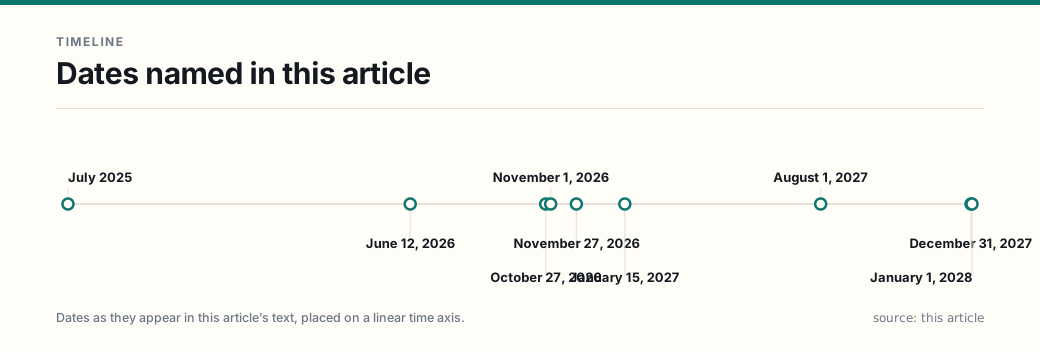
On October 27, 2026, the Centers for Medicare & Medicaid Services published a proposed rule — CMS-9873-P, 91 Fed. Reg. 67656 — that would reverse the order of operations in the individual market. Today the Marketplace estimates your subsidy, pays it during the year, and asks for documents if something does not match. Under the proposal it would verify first and pay second, and it would have to do so again every single year.
This is the second half of a change that has been building since July 2025. Section 71303 of Public Law 119-21 rewrote the tax code so that, for tax years beginning after December 31, 2027, a month counts toward the premium tax credit only if the Exchange has verified the enrollee’s eligibility. Treasury proposed its side of that in October (91 Fed. Reg. 65494, covered here in the eligible-alien explainer). CMS is now proposing the machinery that would actually run at the Exchange: what gets checked, when, and what happens to your premium in the meantime.
Two limits apply before anything else. It does not touch the open enrollment period that starts November 1, 2026 for 2027 coverage, which runs through January 15, 2027 on the federal platform. And it is a proposal — comments close November 27, 2026, and most of its provisions would apply to plan years beginning on or after January 1, 2028.
What would be checked, and against what
The proposed rule lists the items an Exchange would have to verify before any advance payment of the premium tax credit or cost-sharing reduction goes out (proposed § 155.315(f)(4)(ii)):
- Household income and family size.
- Citizenship, status as a U.S. national, or lawful presence — and, for subsidy purposes, eligible noncitizen status.
- Eligibility for or enrollment in other minimum essential coverage, including whether an offered employer plan is affordable and provides minimum value.
- Place of residence.
Most of these are already checked when you apply. What changes is the consequence of a failed check, and the fact that the check would have to be repeated for each plan year rather than carried forward.
The August window that replaces passive renewal
Here is the part that will surprise most enrollees. Under current rules, someone who does nothing during open enrollment is still redetermined from prior-year information and, in most cases, keeps the advance credit. Proposed § 155.335(a)(1) would end that: an Exchange must not redetermine an enrollee eligible for advance payments and cost-sharing reductions unless the enrollee — or whoever files the application — provides or confirms those items on or after August 1 and no later than December 31 of the year before the plan year, and the Exchange verifies them.
Auto-renewal continues — but read what it renews. The statute provides that a consumer cannot be treated as ineligible to enroll solely for failing the new verification requirements, and CMS proposes no change to automatic re-enrollment; an enrollee who takes no action is re-enrolled into a qualified health plan, not necessarily the same plan, and at full price. The practical result is a split: coverage can continue, the subsidy stops unless you confirm.
To make that possible, new § 155.410(h) would require every Exchange to run a pre-open-enrollment verification period starting August 1 each year — the first on August 1, 2027, ahead of 2028 coverage — ending the day before open enrollment begins. At minimum it must accept household income, citizenship, U.S. national status or lawful presence, incarceration status and place of residence. Participating is optional; confirming during open enrollment also counts, so long as the date is on or before December 31.
That cutoff is worth marking, because it can land before open enrollment ends. Where the extended open enrollment applies — the version in force for 2027 coverage — the federal platform’s season runs to January 15, about two weeks past the last date the proposed rule sets for confirming your information for the coming year, so a household that acts in those final two weeks is already late. Where the shortened version applies, the season ends December 31 and the gap disappears. Either way, December 31 is the date to work to.
The statute gives this window teeth. Section 71303(b) excludes from the definition of a qualified health plan any plan enrolled through an Exchange that does not offer a process for verifying income and eligibility for the following year, with the process required by August 1, 2027. An Exchange that skipped it would leave its enrollees with no credit at all.
What happens when something does not match
Today, when the Marketplace cannot confirm a piece of information electronically, it opens a data matching issue and gives you 90 days to send documents — 95 days for citizenship or immigration status — and the advance credit keeps flowing at the amount you attested during that window. That is current § 155.315(f)(4).
The proposal would remove the payment from that window. For the items listed above, an Exchange would not be permitted to pay advance credits or cost-sharing reductions until the item is verified; a data-matching issue about anything else would still be paid on your attestation, as it is now (proposed § 155.315(f)(4)(v)). You can still enroll and pay the full premium, and the 90/95-day document window itself does not disappear. One consequence is older than this rule: if the unverified item is eligibility to enroll at all — citizenship, status or residence — the enrollment itself ends when the window closes without documents.
There are two exceptions, and they are narrow:
- Family-size special enrollment periods. If a member of your tax household qualifies for the special enrollment period for gaining a dependent through marriage, birth, adoption, placement for adoption, placement in foster care, or child support or another court order, or for the loss of a dependent through divorce, legal separation or death, the advance credit is paid on your attested information during the window, as it is now (proposed § 155.315(f)(4)(ii), tracking § 155.420(d)(2)). The federal platform does not currently offer the loss-of-dependent event at all; CMS is taking comment on whether to require it.
- A change you report mid-year. If you have already been verified for the year and then report a change that creates a new data matching issue, the subsidy stays at the amount the Exchange last verified when the change would raise it, and drops to what you attested when the change would lower it (proposed § 155.315(f)(4)(iii)). In other words, a reported increase waits for verification; a reported decrease takes effect immediately.
Holding a plan while you wait
Because a 90-day document window can outlast a 60-day special enrollment window — and can run past the end of open enrollment altogether — CMS proposes a “pended” plan selection at new § 155.400(i). You pick a plan, and the insurer cannot enroll you, and coverage cannot take effect, until the Exchange determines you eligible for the credit or the cost-sharing reductions. That preserves the enrollment even if verification finishes after the enrollment period closed.
When coverage then starts depends on timing, and on which open enrollment rule is in force — more on that below. Where the extended open enrollment applies, the sequence is:
- Resolve everything by the 15th of the month following your otherwise-permitted effective date, and you keep that original date.
- Resolve later, by the 15th of a given month, and coverage starts the first of that month.
- Resolve after the 15th, and it starts the first of the next month.
Where the shortened open enrollment applies — a season ending December 31 — the anchor date moves: resolving everything by January 15 keeps a January 1 start, resolving between the 1st and 15th of a later month starts coverage that month, and resolving after the 15th starts it the following month.
If you are enrolled when the verification succeeds, the credit applies from the first of the first month in which three things are true: every item has been verified for that month, you were enrolled on the first of that month, and the issue was opened before that date.
One limit is unusual enough to flag: the Exchange would not pay advance credit for months in a prior coverage year — you would claim the credit on that year’s return instead, while cost-sharing reductions can still reach back.
What CMS expects it to do
The rule’s own regulatory impact analysis estimates 332,500 fewer people enrolled per year across all Exchanges — 237,500 on the federal platform, 95,000 in state-based marketplaces — and about 5.1 million people who would not be enrolled for an average of 1.5 months while verification completes. The agency attributes both to administrative barriers and presents the rule as an integrity measure; the same numbers also describe eligible people losing months of coverage over paperwork. Both readings are in the document, and the comment period is where they get argued.
A litigation problem sitting under the dates
The effective-date arithmetic depends on which open enrollment rule survives. A June 12, 2026 order in City of Columbus v. Kennedy (D. Md.) vacated the shortened open enrollment provisions of the 2025 Marketplace Integrity rule, and HHS is appealing. So the proposal carries two effective-date tables for pended selections — one if the extended open enrollment survives, one if the shortened version is restored. The 15th-of-the-month logic is common to both; the anchor date is not.
What to do with this now
- Nothing changes for 2027 coverage. Enroll or update your application between November 1, 2026 and January 15, 2027 as usual. The dates behind the subsidy cliff explainer still govern that year.
- If you take a subsidy, put August 1, 2027 in your calendar. That is when the first verification window opens, and the year it covers is the first one where an unconfirmed household would be renewed without financial help.
- Keep the paperwork. Proof of income, proof of residence, and immigration documents if they apply — the same items the Marketplace already asks for when a check fails. Reconstructing them under a 90-day clock is the part people lose.
- Answer every notice. Today an unanswered notice keeps the subsidy flowing for 90 days and then puts the enrollment at risk if the item was eligibility to enroll; under the proposal the subsidy stops while the notice is still open. Either way, the notice is the deadline. The mechanics of a subsidy-termination notice are in the duplicate-coverage notice explainer.
- Never pay anyone to “verify” your eligibility. The Marketplace does not charge for verification and does not ask for gift cards, wire transfers or one-time codes to keep a subsidy. Messages that do are fraud — the pattern is the same one that followed the $500 refund payments.
- If your state runs its own marketplace, check its process separately. State-based Exchanges would have to adopt these requirements, and CMS says it is considering letting them delay the family-size exception and the pended selection until 2029 — so dates and mechanics will vary by state even where the tax rule is federal.
- Comment if this affects you. The docket is CMS-2026-3367 at regulations.gov, with the deadline of November 27, 2026 — about a month, rather than the 60 days major rules often get.
The enrollment basics are in ACA Marketplace Basics, and the rest of what the network covers is at omc.center/resources.
Bottom line
For 2027 coverage, nothing here applies. For 2028, the proposal turns the subsidy from something that follows your renewal into something you have to re-earn each autumn: confirm income, family size, status, other coverage and address between August 1 and December 31, and if any of it cannot be verified, expect the premium help to wait until it can. The rule is proposed, the comment window closes November 27, 2026, and the first date that matters to a household — August 1, 2027 — is still about nine months out.
This article is general information about federal Marketplace rules, not advice about your eligibility, taxes or plan choice. Requirements differ for state-based marketplaces and depend on household circumstances — confirm current rules at HealthCare.gov or your state’s marketplace, and consult a qualified professional about your own situation.
Frequently asked questions
- Does this change my 2027 coverage or this year's open enrollment?
- No. Open enrollment for 2027 coverage runs November 1, 2026 through January 15, 2027 on the federal platform, and the proposed rule says most of its provisions would apply to plan years beginning on or after January 1, 2028. It is also still a proposal — comments close November 27, 2026 — so nothing in it binds anyone yet.
- If I do nothing during open enrollment, do I lose my subsidy in 2028?
- Under the proposal, yes — that is the change. Today an enrollee who takes no action is redetermined from prior-year data and usually keeps the advance credit. The proposed rule would bar an Exchange from redetermining someone eligible for advance payments unless the enrollee or the application filer provides or confirms income, family size, citizenship or immigration status, other coverage and residence between August 1 and December 31 of the year before the plan year, and the Exchange then verifies it. Auto-renewal would continue into a qualified health plan, at full price; the subsidy would not follow automatically.
- What happens if the Marketplace cannot verify something about me?
- Under current rules you get 90 days — 95 for citizenship or immigration status — to send documents, and the advance credit keeps flowing at the amount you attested during that window. The proposal would stop the payments for that window instead, for the items the rule lists: no advance credit and no cost-sharing reductions until the item is verified, though you could still enroll and pay full price, or hold a plan selection until verification comes through. Data-matching issues about anything else would still be paid on your attestation. There is a narrow exception for family-size special enrollment periods such as a birth, an adoption or a marriage.
- Does buying coverage without a subsidy involve any of this?
- Mostly not. The checks and the annual confirmation exist because the credit is being paid, so a full-price buyer is not subject to either, and the statute says a consumer cannot be treated as ineligible to enroll solely for failing the new verification requirements. But eligibility to enroll at all still has to be verified, and an unresolved citizenship, status or residence issue ends the enrollment at the end of the 90- or 95-day window whether or not a subsidy is attached.
Sources
Each source is a primary or official reference, checked before publication. Links open the original.
- CMS, 'Patient Protection and Affordable Care Act, Exchange Pre-Eligibility Verification,' proposed rule, CMS-9873-P, RIN 0938-AW03, 91 Fed. Reg. 67656 (October 27, 2026) (federalregister.gov/documents/2026/10/27/2026-21891/patient-protection-and-affordable-care-act-exchange-pre-eligibility-verification)
- One Big Beautiful Bill Act, Public Law 119-21 (July 4, 2025), section 71303 — adding 26 U.S.C. § 36B(c)(3)(A)(ii) and § 36B(c)(5), including the verification condition on coverage months and the August 1 process requirement (govinfo.gov/content/pkg/PLAW-119publ21/html/PLAW-119publ21.htm)
- Treasury and IRS, 'Premium Tax Credit,' proposed rule, REG-101576-26, 91 Fed. Reg. 65494 (October 15, 2026) — the tax-side companion to this rule (federalregister.gov/documents/2026/10/15/2026-21056/premium-tax-credit)
- 45 CFR 155.315 — the inconsistency period and the current requirement to pay advance credits during it (ecfr.gov/current/title-45/subtitle-A/subchapter-B/part-155/subpart-D/section-155.315)
- 45 CFR 155.335 — annual eligibility redetermination, the provision the proposal would rewrite (ecfr.gov/current/title-45/subtitle-A/subchapter-B/part-155/subpart-D/section-155.335)
- 45 CFR 155.400 and 45 CFR 155.410 — enrollment mechanics and open enrollment periods, where the pending-selection and August verification provisions would sit (ecfr.gov/current/title-45/subtitle-A/subchapter-B/part-155)
- 45 CFR 155.420 — special enrollment periods, including the family-size events at § 155.420(d)(2) (ecfr.gov/current/title-45/subtitle-A/subchapter-B/part-155/subpart-D/section-155.420)
- HealthCare.gov, dates and deadlines for the 2027 open enrollment period (healthcare.gov/quick-guide/dates-and-deadlines)